 Roost
RoostChange control without the meeting.
ITIL-style change enablement, made asynchronous. Design the approval path on a canvas, then let requests route themselves through manager and CAB gates.
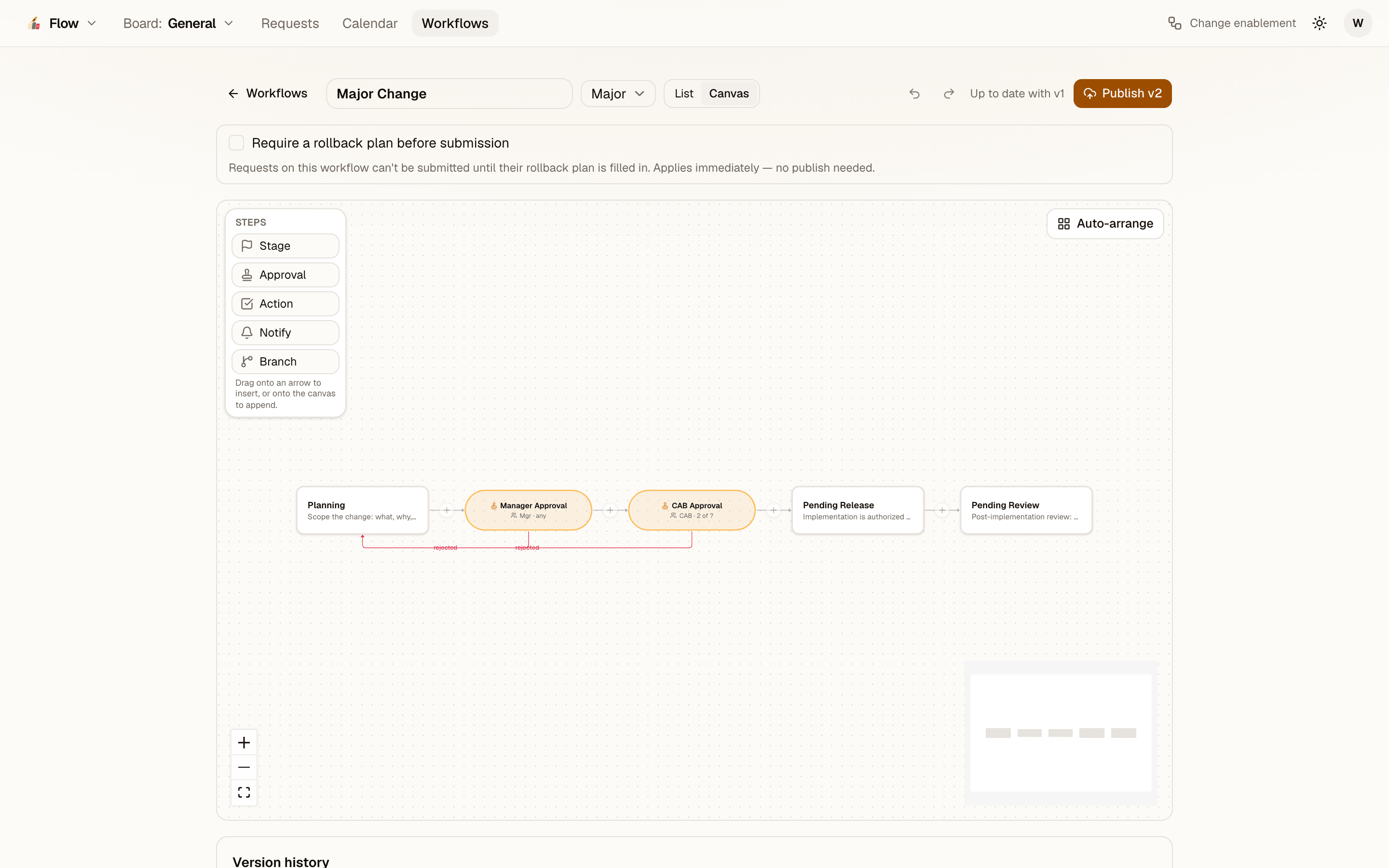
Branching
Branch steps read the request's priority and risk level and send it down the right path: urgent hotfix to the short lane, high-risk change through the full CAB.
Versions
Publishing snapshots the workflow into an immutable version. In-flight requests stay pinned to the version they started on; editing a template never rewrites history.
Templates
Start from the seeded ITIL workflows (Standard, Normal, Major, Emergency) or draw your own. Stages, approval gates, actions, notifications, and branches drop onto the canvas.
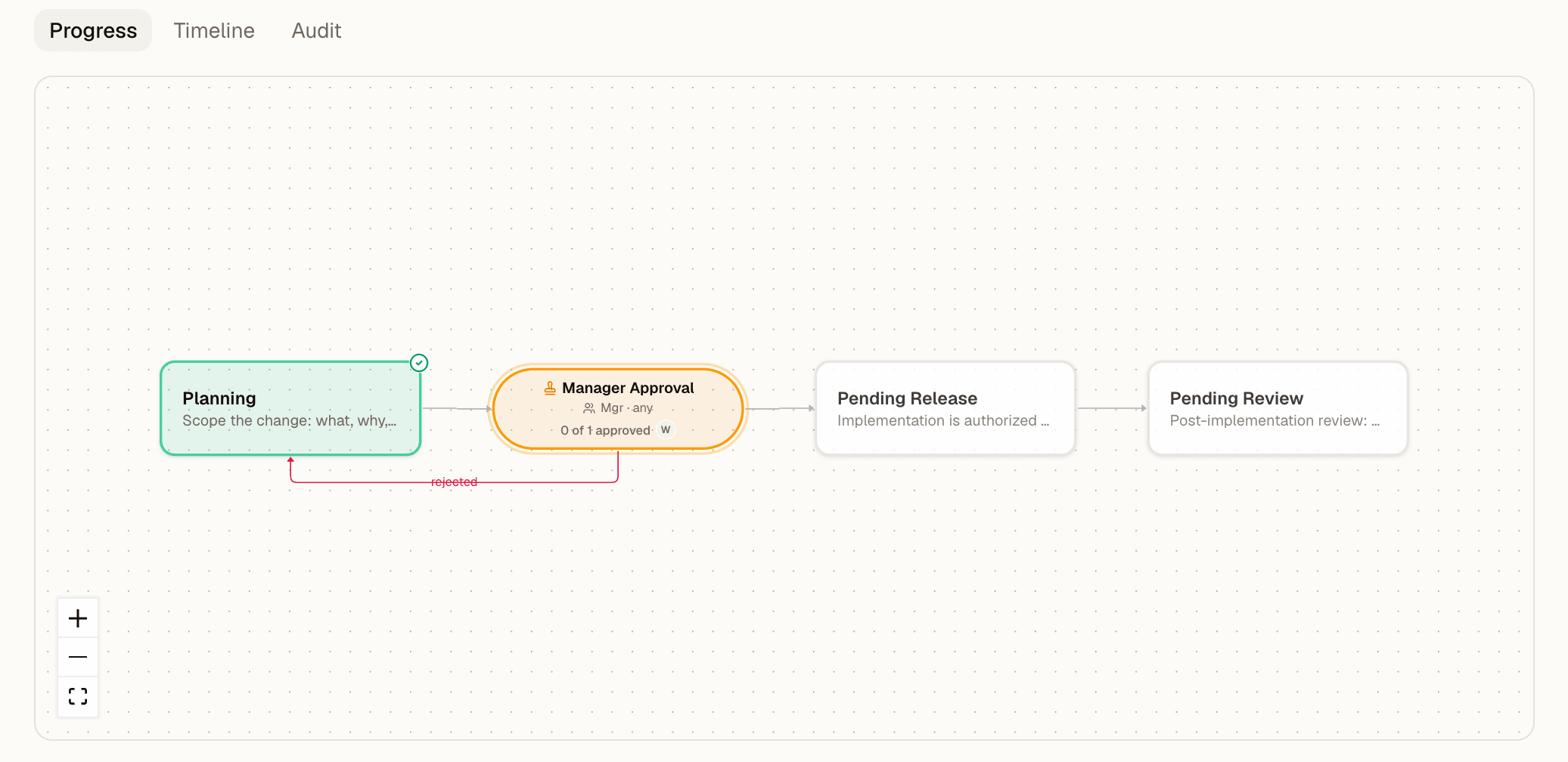
The request rides the map.
Every request renders its own live progress: green for passed, amber where it stands now, vote tallies on the gates, and the rejection path traced in red when one was taken.
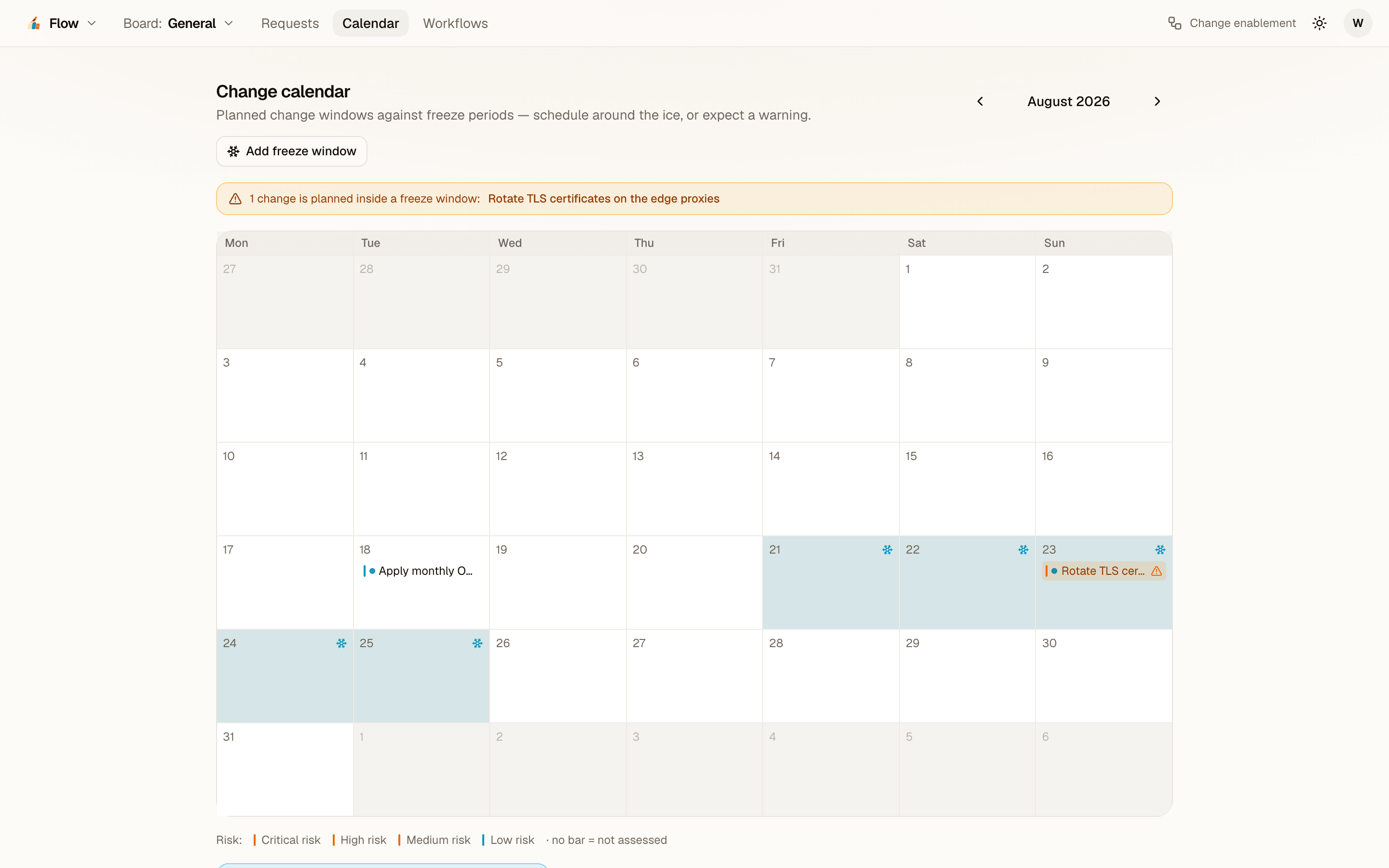
A calendar that says no.
Planned changes sit on one calendar with the freeze windows. Plan inside a freeze and the request is flagged before it is submitted.
Approvers that resolve themselves
Dynamic approvers such as the requester's manager, and groups such as the CAB or ECAB, resolve to the right people at submission time.
Approvals on your time
Gates collect votes asynchronously by email and in-app. Any-of or all-of quorums, reassignment when someone is away, out-of-office delegation.
Risk graded before anyone votes
Impact times likelihood gives a risk level on every request, and the workflow can route on it.
Plans, not vibes
Implementation, rollback, test, and downtime plans travel with the request. A workflow can refuse submission without a rollback plan.
A calendar that says no
Freeze windows per change board or org-wide. Planning a change inside one is flagged before it is submitted.
Rejection with a path back
A rejected gate returns the request to rework with the reason attached. Resubmission restarts the gate, and the audit keeps both rounds.
An audit log that can't be edited
Every submission, decision, reassignment, and closure is attributed and timestamped, exportable as CSV. There is no delete.
Recurring changes
Schedule the monthly patch window once. Each run is created, pre-filled, and submitted for you.
Linked to the work and the fallout
Spawn or link a board card so delivery and change control never drift apart, and see which incidents a change caused.
Put your next risky change through a real gate.
Seeded ITIL workflow templates mean your first change request can go through review today. Roost is in beta and invite-only.